
Visual configure, price, quote
Visual CPQ software. One product, one commercial record.
Configurix connects rule-based 3D product configuration, live pricing, branded quotes, approvals and project data. Customers understand what they are buying. Salespeople and dealers work from the same saved configuration instead of rebuilding it across forms, spreadsheets and documents.
Havenform Outdoor
Bioclimatic pergola · Quote CX-2418
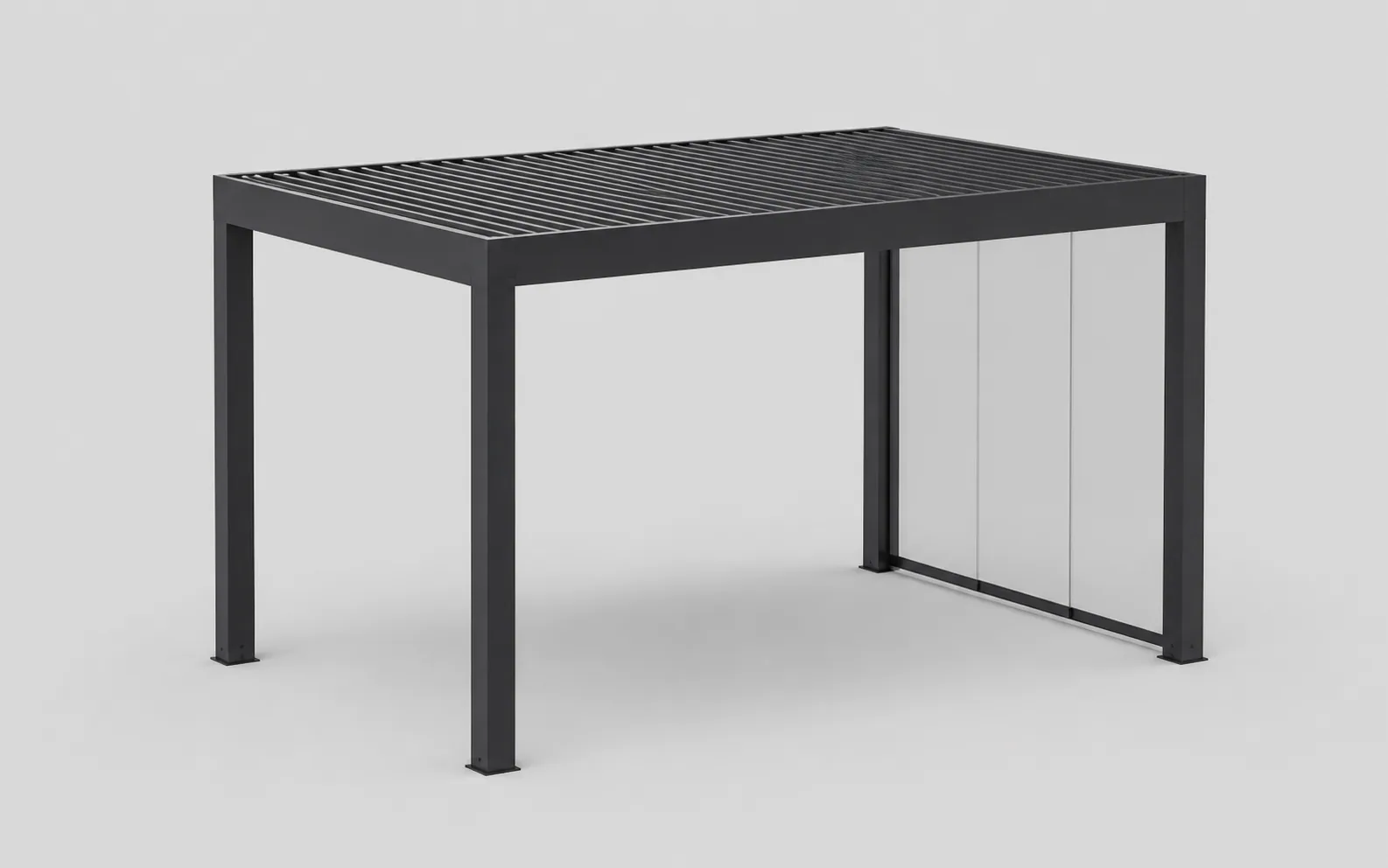
Current project
Calculated price
€10,440
Clear definition
What visual CPQ actually connects.
Visual CPQ is configure-price-quote software with a visual product experience. A customer, salesperson or dealer defines a product through controlled choices. Product rules decide what is allowed. Pricing rules calculate the commercial result. Quote rules determine how that saved product is presented, reviewed and approved.
The visual layer is not a disconnected render. In a properly scoped implementation, geometry and materials respond to the same dimensions, components and finishes recorded in the project. The quote can then reference the selected product rather than relying on a salesperson to interpret a screenshot and re-enter every option.
Configurix can extend that continuity into CRM, dealer workflow, ecommerce, order processing or optional operational output. Each connection is defined and tested separately, so a strong visual does not hide an incomplete pricing, document or handoff process.
Configure · Price · Quote
Three jobs. One governed project.
Visual CPQ becomes valuable when each layer uses the current saved revision instead of passing an incomplete interpretation to the next tool.
Configure
Build a permitted product
Guide dimensions, structures, components, materials and accessories through catalogue rules. The 3D product and structured specification respond to the same selections.
Price
Calculate the commercial result
Apply approved price lists, formulas, quantities, installation, delivery, taxes, discounts and market rules to the saved configuration.
Quote
Create an actionable proposal
Generate a branded quote from the configured product, customer record, imagery and commercial terms—without rebuilding the project in another tool.
Rules behind the interface
The difficult work is not the colour picker.
A useful evaluation tests how the software represents the actual catalogue, price model and output—not how many controls appear in a demonstration.
Dimension rules
Width, height, projection, bay, module and opening limits
Set minimums, maximums, increments and derived dimensions. A wall-mounted pergola, door opening or fence run can use different measurement logic while remaining inside one governed catalogue.
Compatibility rules
Required, excluded, dependent and review-only combinations
Require a motor for a roof type, limit a screen by opening size or make a component unavailable in a selected market. Exceptional cases can be flagged for review instead of offered as standard choices.
Quantity and formula pricing
Area, perimeter, module count, component quantity and labour
Calculate commercial values from the actual product structure. Pricing can combine base systems, dimensional formulas, accessories, installation, delivery and scoped service items.
Account and market pricing
Currencies, dealer tiers, regional lists, tax and visibility
Control which catalogue and commercial information a public buyer, salesperson or dealer can use. Market rules can change more than language: availability, units, currency and documents may also differ.
Discount and approval rules
Permissions, thresholds, margins and manual review
Define who can discount, which situations need approval and what appears on the customer document. The quote can remain connected to the approved revision and commercial decision.
Output rules
Quote lines, specifications, BOM, order and project fields
Map the saved configuration to the exact data required downstream. Commercial documents and operational outputs require separate acceptance tests even when they start from the same project.
Connected visual CPQ workflow
From first selection to approved handoff.
The interface can change by audience, but the product identity should remain recognizable as it moves through configuration, commercial review and the next system.
Product
Choose an approved catalogue entry
The user starts from a product family, system or template that is available for their market, account and role.
Rules
Create a valid configuration
Guided choices define dimensions, components and finishes. Dependencies and exclusions respond immediately instead of being discovered after the quote.
Visual
See the exact selected variant
Interactive 3D makes meaningful product differences easier to understand while the structured configuration remains the source of truth.
Price
Calculate for the right commercial context
The system applies the implemented list, formula, quantity, account, tax and permission rules to the current revision.
Quote
Issue a proposal from the same project
Customer details, product selections, visual snapshots, price and terms populate the agreed quote or proposal template.
Approval
Preserve the accepted revision
The approved quote points back to the saved configuration, reducing ambiguity about which dimensions, options and commercial terms were accepted.
Handoff
Send defined data to the next team
CRM, ERP, ecommerce, scheduling, order or optional production output continues from agreed fields rather than a second manual interpretation.
One catalogue, controlled experiences
Every role sees what it needs.
Visual CPQ should not expose the same catalogue, price or controls to everyone. Roles make a shared platform commercially usable across direct, assisted and channel sales.
Website customer
Explore guided choices, understand the configured product and continue to a price, quote request, consultation or checkout action.
Customer-safe catalogue, public prices or quote request
Sales consultant
Continue the customer's project, compare alternatives, use permitted commercial controls and prepare the next proposal during the conversation.
Sales catalogue, revisions, pricing and quote tools
Dealer or distributor
Use account-specific products, price context, branding and permissions while the product owner keeps shared catalogue governance.
Account catalogue, tier, market and document permissions
Product administrator
Maintain products, options, rules, prices, translations and publishing status through an agreed change and test process.
Governance, publishing, audit and maintenance access
Category comparison
3D viewer, configurator or visual CPQ?
The categories overlap. Use the required product rules, commercial logic and outputs to decide which capability you actually need.
| Question | 3D viewer | Product configurator | Visual CPQ |
|---|---|---|---|
| Primary purpose | Show an existing product | Define a permitted product | Configure, calculate and propose a permitted product |
| Product rules | Usually limited or absent | Dimensions, dependencies and compatibility | Product rules plus commercial and approval logic |
| Pricing | Not normally connected | Optional, from simple to advanced | A governed part of the configured project |
| Quote output | Separate process | Possible when included | Generated from configuration, price and customer context |
| Best fit | Product presentation | Guided catalogue selection | Complex sales that need visual clarity and commercial continuity |
Connected systems
Integrate the record, not only the picture.
Every integration starts with ownership: which system creates, controls and updates each field, and what happens when a record changes or a handoff fails.
CRM
Send customer, source, configuration ID, project value, status and agreed follow-up fields into the sales record.
ERP and order systems
Pass approved product identifiers, components, quantities, commercial data and order context through a scoped interface.
PIM and catalogue sources
Define which system owns product names, options, prices, media, availability and translations before synchronization begins.
Website and ecommerce
Embed or link the configurator, preserve attribution and continue to quote, consultation, cart or checkout where the buying model allows it.
Documents and signatures
Create branded proposal, specification or approval documents and connect the accepted revision to the project record.
API, webhook and file exchange
Move defined events and fields between systems with named ownership, identifiers, retry behavior and exception handling.
Buyer evaluation checklist
Ask every vendor to prove the same workflow.
A comparable evaluation uses one representative product, one difficult case and agreed evidence for configuration, price, quote, roles and handoff.
Representative product
Can the vendor model a real product family—not only a generic demo?
Boundary dimensions
What happens at minimum, maximum, incremental and derived measurement limits?
Invalid combinations
Are incompatible choices prevented, explained or sent to a controlled review path?
Price evidence
Can approved examples be reproduced across dimensions, options, accounts and markets?
Revision control
Which configuration and price revision does the quote, approval and downstream record reference?
Role permissions
What can customers, salespeople, dealers and administrators see or change?
Document fidelity
Does the generated quote contain the exact imagery, lines, terms and fields your process needs?
Integration contract
Which system owns every field, and how are rejected or unavailable handoffs handled?
Mobile performance
Does the representative model remain usable on the actual devices your customers use?
Catalogue maintenance
Who can publish product, price, language and market changes after launch?
Implementation approach
Start with one complete commercial path.
A focused first release proves the relationship between product rules, visual behavior, calculation and output before the catalogue expands.
Discover
Map the representative product, users, prices, documents and downstream systems.
Model
Structure dimensions, components, compatibility, visual behavior and commercial logic.
Accept
Test normal, boundary, invalid and role-specific examples with named owners.
Operate
Publish the agreed scope and maintain catalogue, price, language and market changes.
Visual CPQ FAQ
Detailed answers for product, sales and operations teams.
Use these questions to compare 3D configuration, pricing, quotation, roles, integrations and long-term ownership without assuming every CPQ system works the same way.
Continue your evaluation
Choose the guide for your next decision.
Product pricing engine
Live calculation methods, price waterfalls, account and market context, discounts, revisions and acceptance evidence.
Read the guideConfigurator BOM generation
Configured component selection, variable quantities, revisions and production-ready operational views.
Read the guideConfigurator security and privacy
Data boundaries, identity, dealer isolation, object authorization, APIs, audit evidence and acceptance testing.
Read the guideConfigurator integrations
Plan source-of-truth, API, webhook, CRM, ERP, ecommerce and BOM handoffs.
Read the guide3D configurator examples
Explore how twelve product categories connect choices, rules, pricing and operational output.
Read the guideCompare configurator software
A common test pack, weighted scorecard, RFP language and cost model for vendor evaluation.
Read the guideProduct configurator software
The full catalogue, rule, 3D, pricing and project-data category.
Read the guideCPQ vs product configurator
Decide between configurator-led, CPQ-led and connected visual-CPQ architectures using explicit proof tests.
Read the guideCPQ implementation guide
Plan readiness, catalogue, pricing, approvals, migration, integrations, testing, rollout and governance.
Read the guideVisual product configurator
The visual-state, 2D and 3D interaction, fidelity, accessibility and performance layer behind connected CPQ.
Read the guideCustom CPQ system
Requirements for custom products, calculations, quotes and integrations.
Read the guideConfigurator for websites
Customer experience, embedding, analytics, performance and lead capture.
Read the guideWhite-label configurator
Brand, domain, dealer access, multilingual markets and governance.
Read the guideB2B product configurator
Dealer roles, account pricing, quotes, approvals and configured orders.
Read the guideGuided selling software
Needs-led questions, product rules, visual decisions and a connected next step.
Read the guideAI product configurator
AI-assisted interpretation connected to deterministic rules, 3D, commercial logic and traceable projects.
Read the guideSales configurator software
Assisted product decisions, accurate pricing, approvals, proposals and persistent sales records.
Read the guideConfigurator cost and ROI
Implementation scope, TCO and a calculator using your own workflow baseline.
Read the guideTest visual CPQ with one real product.
Bring the dimensions, options, price examples and quote behind a representative product. We will map how configuration, visualization, commercial rules and the next system can remain connected.
Plan your visual CPQ demo